Observe from a safe place.
Note leaks, missing materials, or visible debris from the ground. Record when you first noticed a change. Leave roof access and temporary repairs to qualified professionals.
HURRICANES & BEYOND / FLORIDA ROOF DAMAGE
A leak. Missing shingles. A roof that doesn't look right. Start with what you can see, understand the storm context, and prepare for a roofing inspection.
Repairs · Replacement planning · Storm concerns
Stay off the roof and away from damaged areas or downed power lines. For immediate danger, call 911. This website does not dispatch emergency services.
01 / MAKE THE NEXT STEP COUNT
Note leaks, missing materials, or visible debris from the ground. Record when you first noticed a change. Leave roof access and temporary repairs to qualified professionals.
Save safely taken photos, dates, and receipts. Nearby storm reports can add context to your timeline; they cannot establish damage to your home.
Get the observed condition and proposed work in writing. An inspection helps distinguish a limited repair from a larger replacement project.
SEVEN DISASTERS / ONE CLEAR NEXT STEP
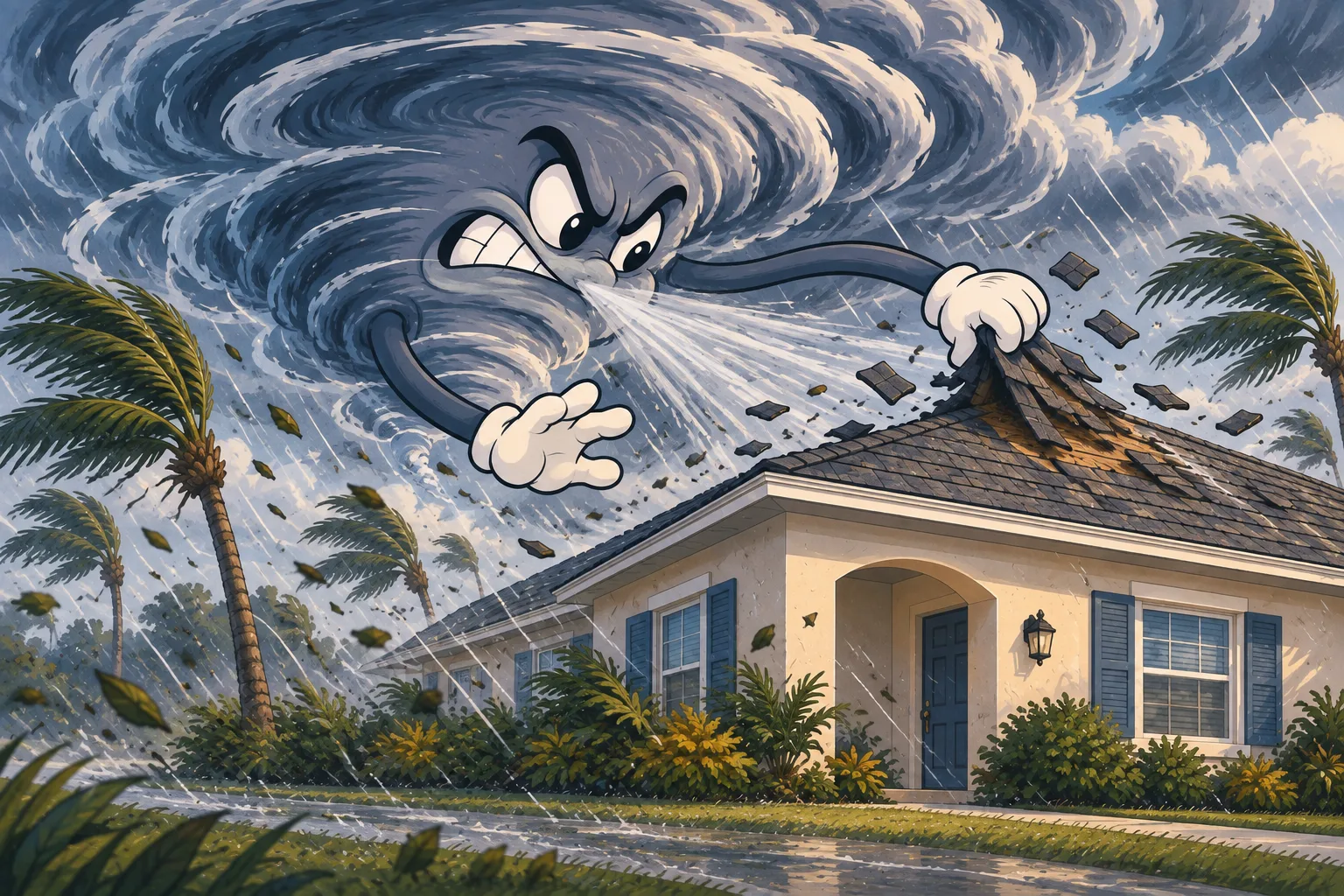
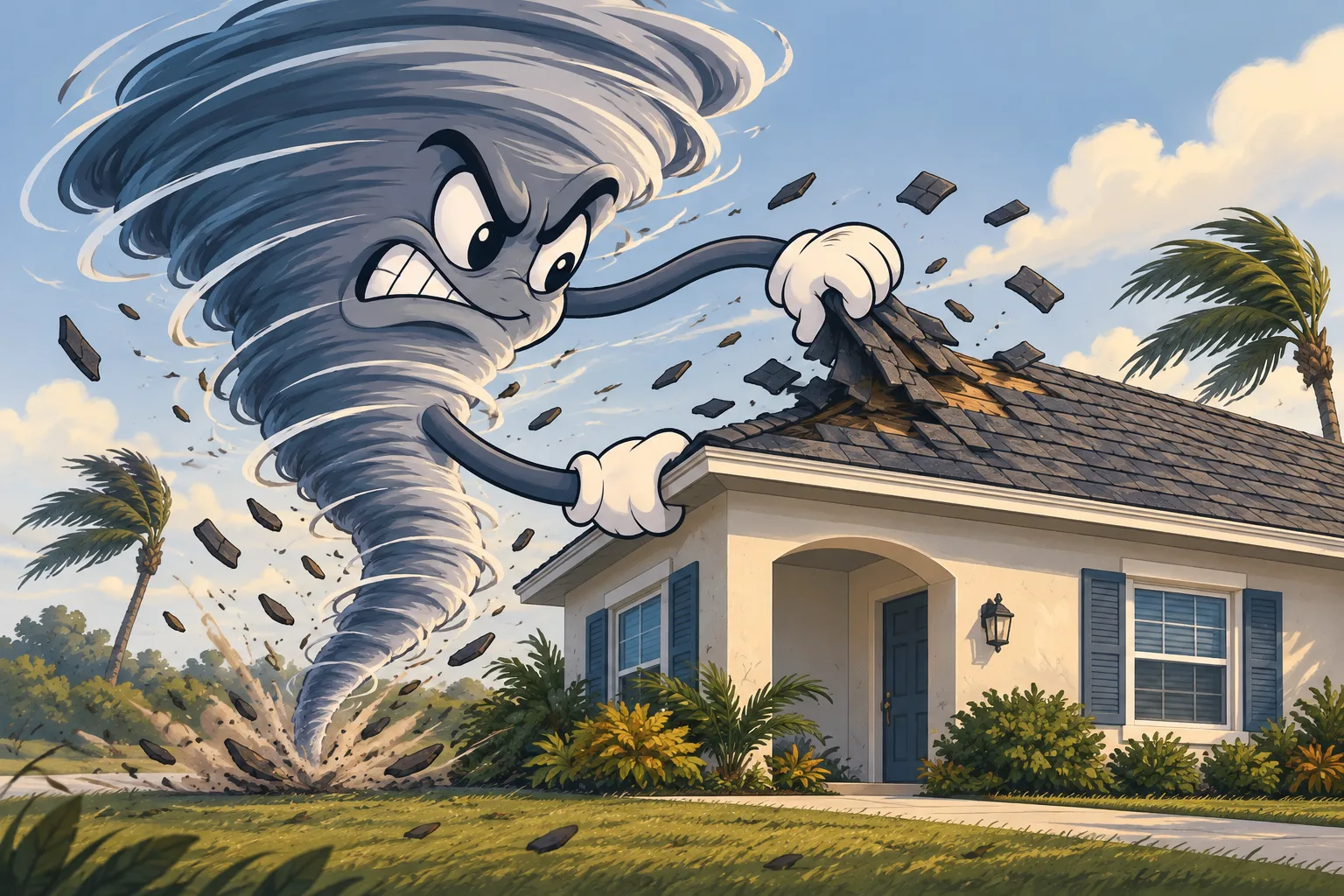
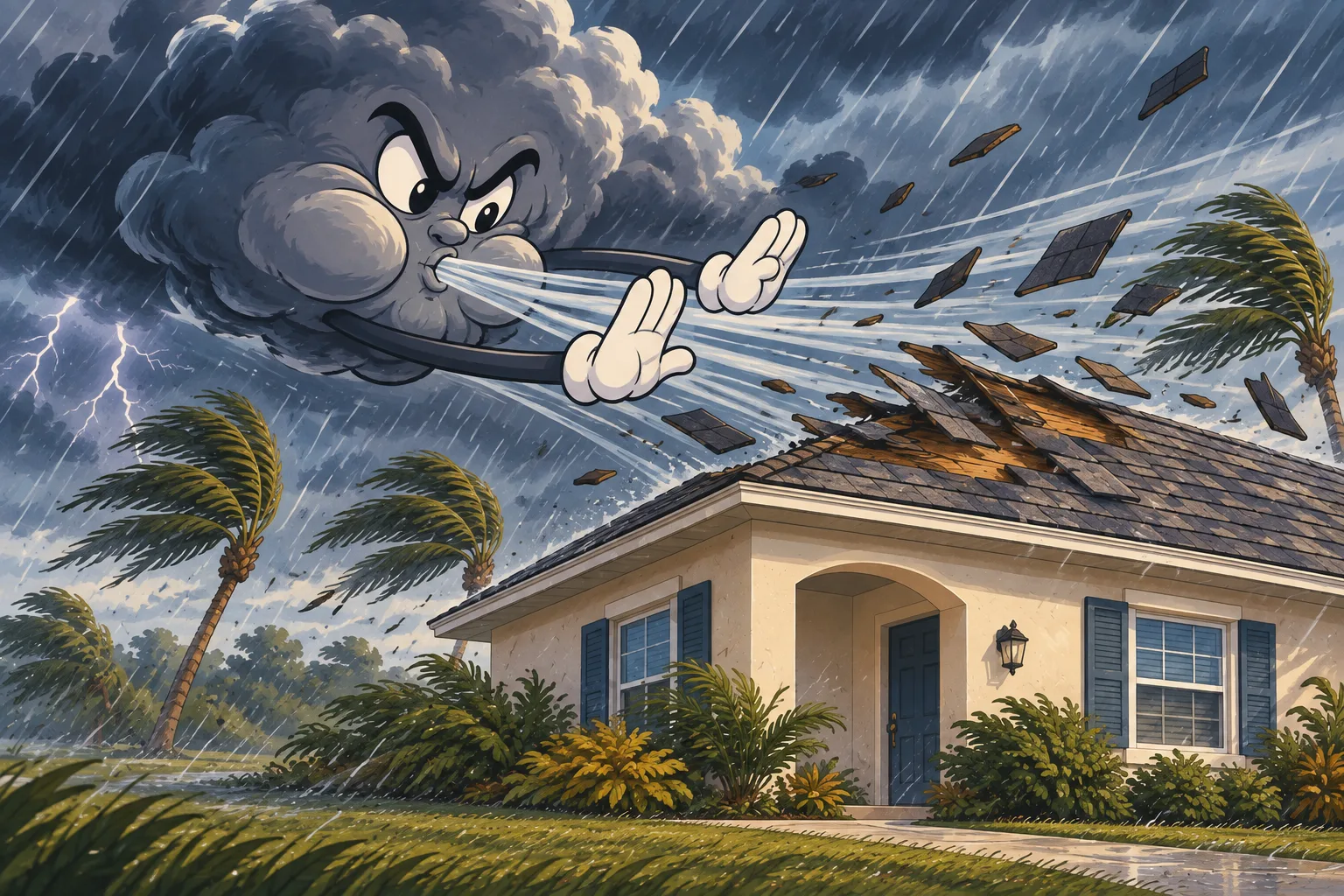
These illustrations explain possible damage, not what happened to your home. A professional inspection helps determine whether repair or replacement is appropriate.
01 / DAMAGE GUIDE
Wind can lift shingles and flashing, break tiles, and drive rain through damaged roof openings. Flying debris can puncture the roof; severe winds can damage decking and connections.
From the ground, look for missing materials, loose edges, displaced vents, and new ceiling stains after the storm.
Tell your insurer when you noticed the damage and ask which deductible applies. Describe roof leaks separately from rising floodwater; coverage can differ. Ask about documentation and inspection before permanent repairs.
Ask a licensed roofer to inspect the covering, flashing, decking where accessible, and attachment points. Request photos and an itemized repair-versus-replacement recommendation.
02 / DAMAGE GUIDE
Extreme localized winds and airborne debris can strip roofing, puncture decking, and compromise roof framing. A roof may be unsafe even when damage looks limited from the street.
Watch for shifted rooflines, large openings, and fallen debris. Stay outside a visibly unstable building until authorities or qualified professionals say it is safe.
Report the suspected tornado loss promptly. Keep the event date, safe photos, emergency-repair receipts, and any evacuation or inspection records. Ask your insurer how to document inaccessible areas.
Ask whether structural assessment is needed before roof access. The roofer should explain damaged components and whether an engineer or building official needs to be involved.
03 / DAMAGE GUIDE
Strong gusts can lift or crease shingles, loosen flashing, displace tiles, and damage ridge caps. Rain can enter through those openings without a hurricane or tornado.
Note missing shingles, lifted edges, loose metal, and new leaks. Observe only from a sheltered, safe place after the storm has passed.
Record the date and describe what changed. Ask your insurer about wind coverage, the applicable deductible, and the documents needed; a nearby wind report alone does not prove roof damage.
Request inspection of edges, ridges, flashing, and affected roof slopes. Ask whether the remaining materials can support a durable repair.
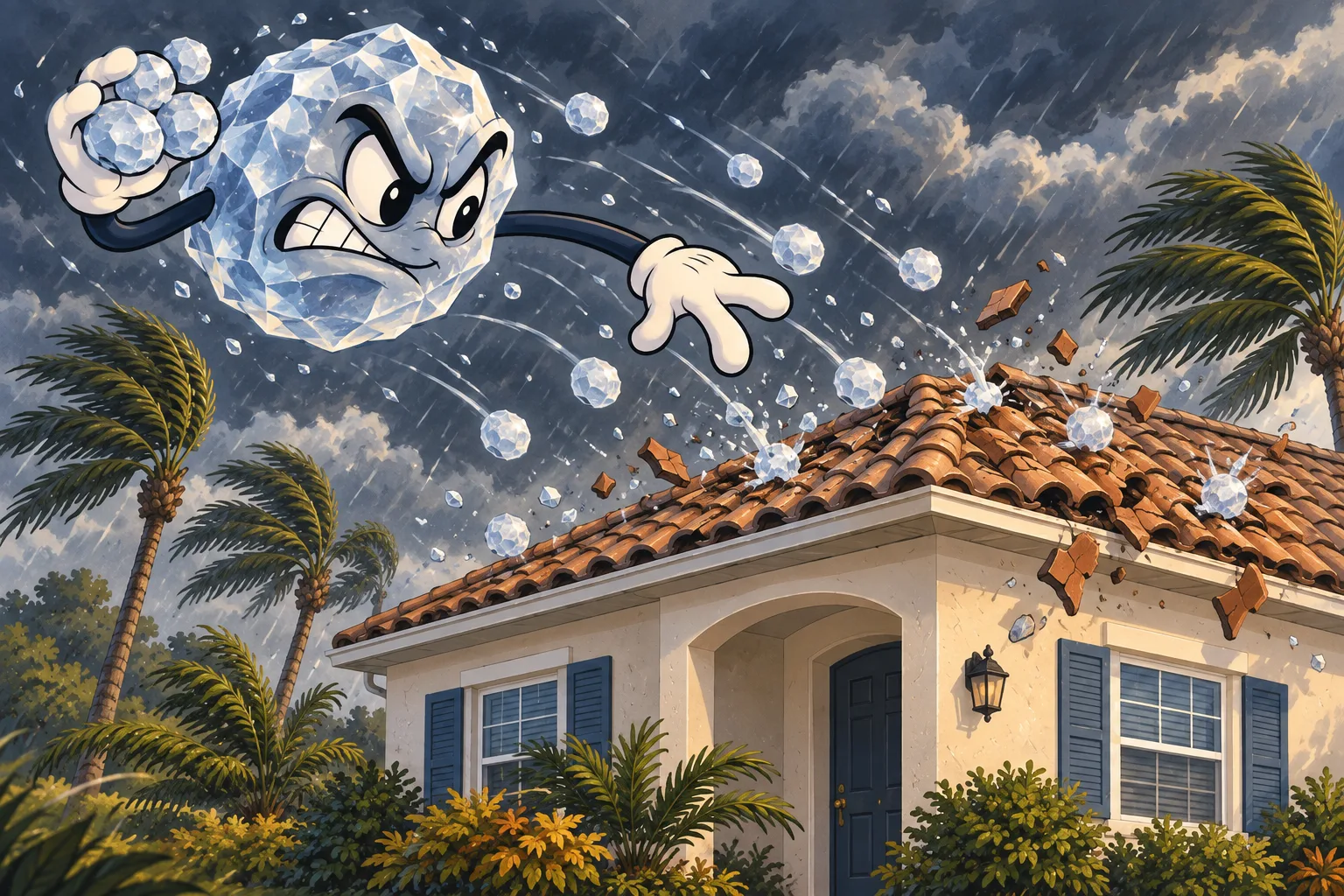
04 / DAMAGE GUIDE
Hail impacts can bruise or fracture asphalt shingles, crack tiles, and dent metal roofing. Damage can be difficult to judge from the ground; dents alone do not settle repair needs.
Note the approximate storm time and safely photograph hail or damage to gutters and nearby surfaces. Do not climb up to look for impact marks.
Share factual observations and dated photos with your insurer. Ask how it evaluates hail damage and whether your policy treats cosmetic damage differently from damage affecting roof performance.
Ask for an inspection of all affected slopes, flashing, vents, and roofing materials, with photos distinguishing impact damage from wear.
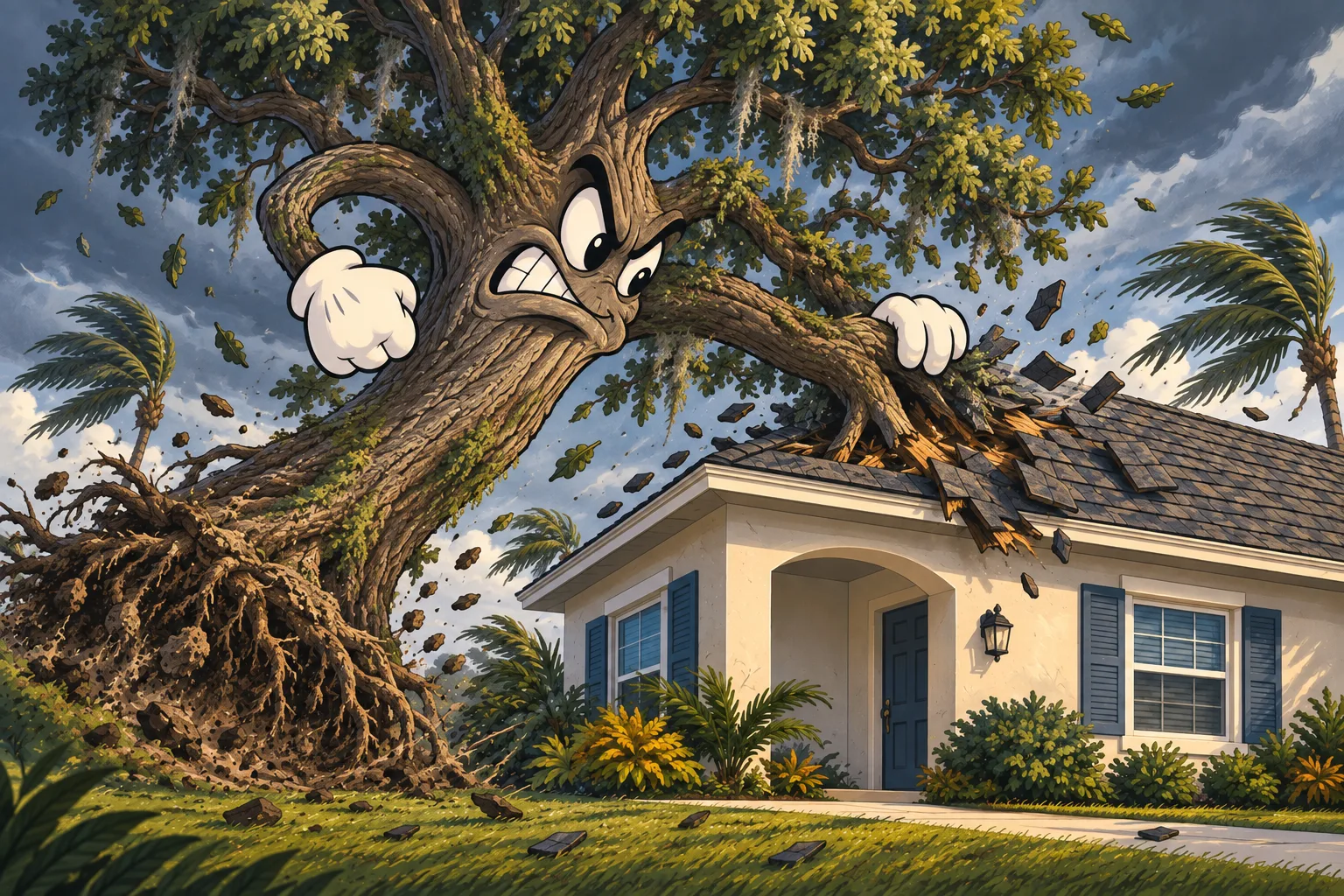
05 / DAMAGE GUIDE
Heavy limbs can break tiles, puncture shingles and decking, or damage rafters. The weight of a tree can make the roof unstable and leave hidden damage around the impact.
Keep clear of the tree, damaged rooms, and nearby wires. Do not attempt to cut or move a tree resting on the roof yourself.
Contact your insurer and ask how to coordinate safe tree removal, temporary protection, and the roof inspection. Photograph the position of debris from a safe distance before removal when possible.
Arrange qualified tree removal and a roofing inspection in a safe sequence. Ask about the decking and framing beneath the impact, not just the visible covering.
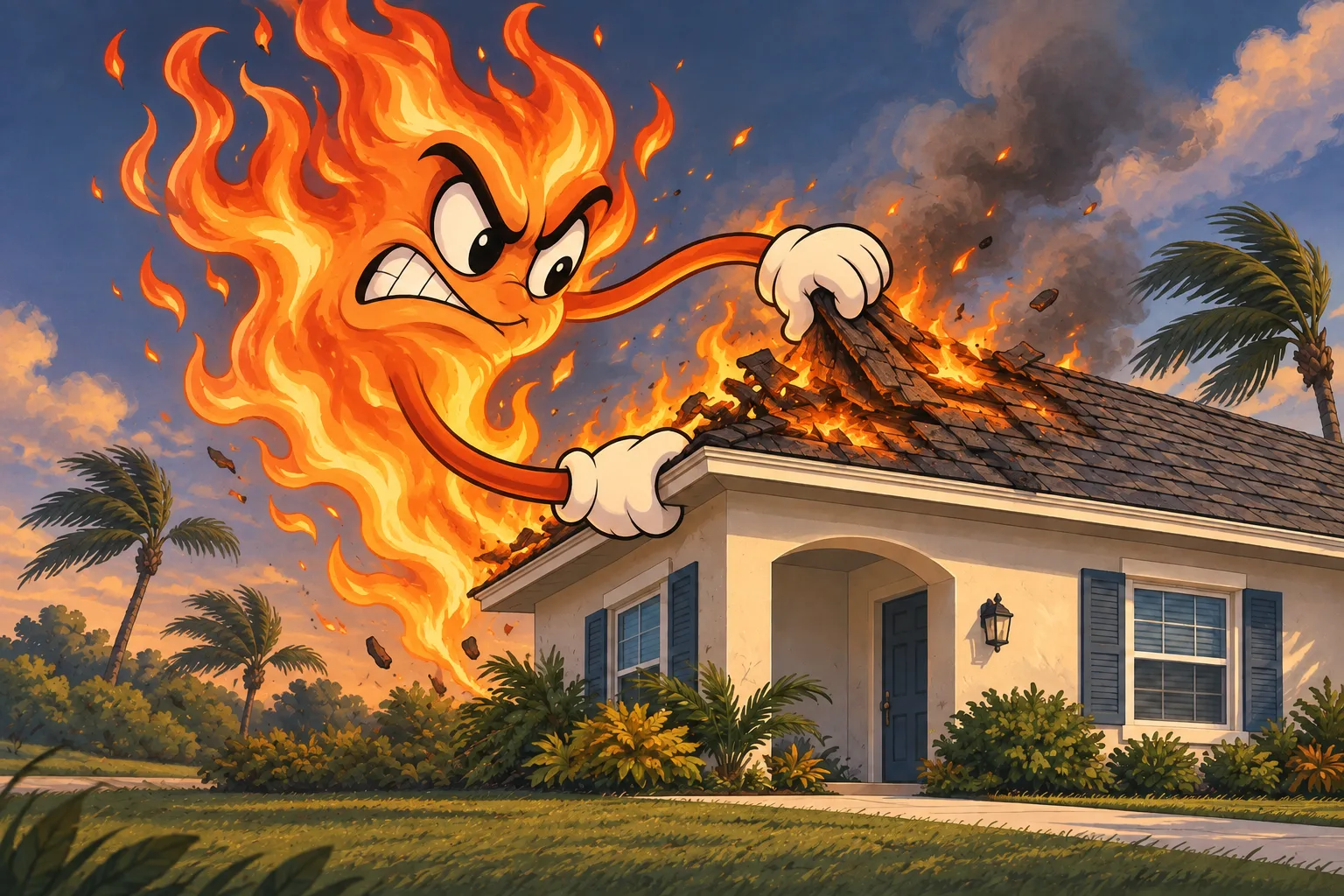
06 / DAMAGE GUIDE
Flames and intense heat can damage roof coverings, underlayment, decking, and framing. Firefighting water can also affect roof assemblies and the spaces below.
Do not re-enter until the fire department or appropriate authorities clear the property. Leave burned materials and unstable areas undisturbed unless removal is required for safety.
Notify your insurer and request instructions for documenting the fire, securing the home, and preserving damaged materials. Keep fire-response records and receipts for approved or necessary temporary measures.
After the site is cleared, ask for a roof and structural assessment. The written scope should address damaged layers and any coordination with restoration specialists.
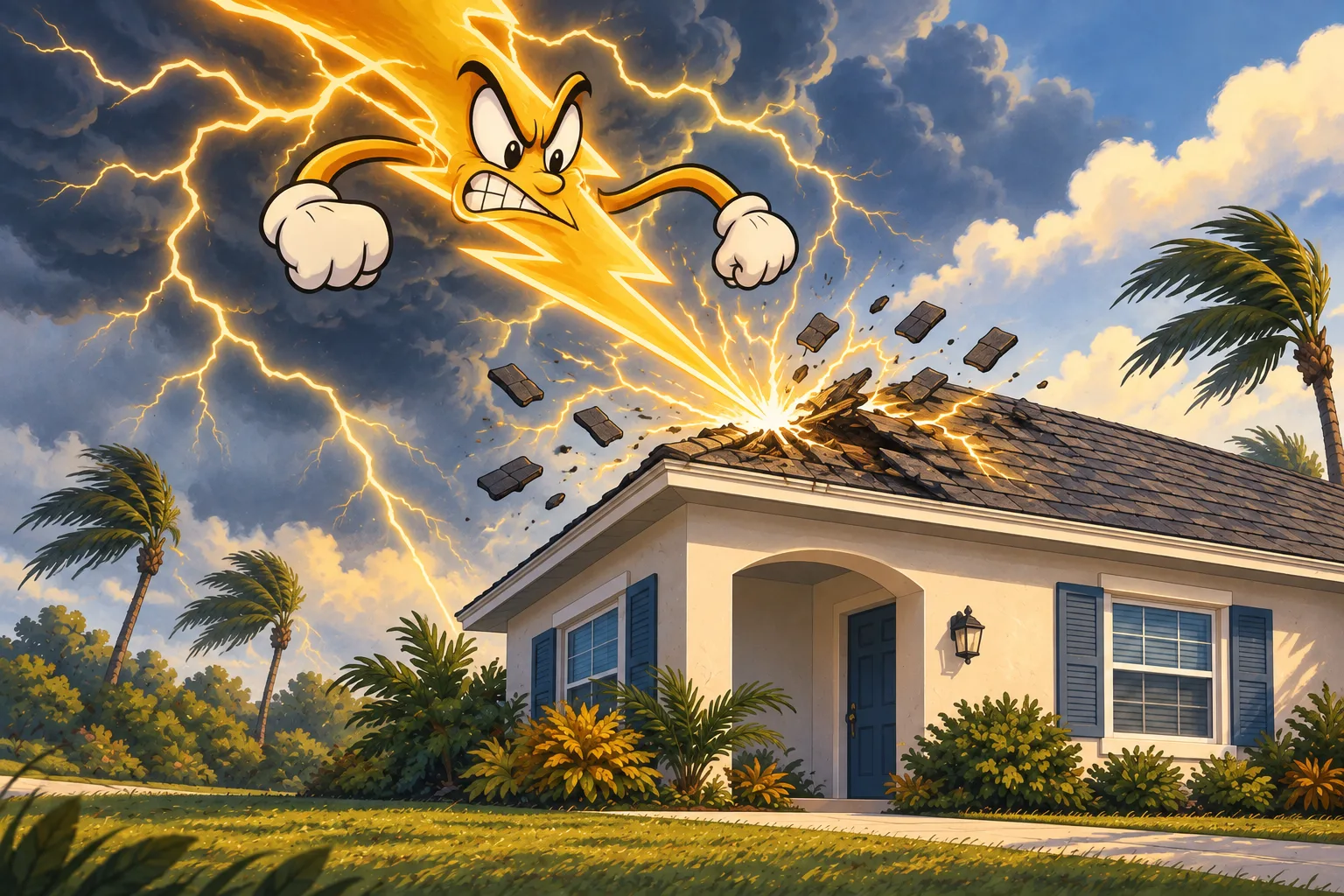
07 / DAMAGE GUIDE
A direct strike can puncture or scorch roofing, damage nearby components, and start a fire. Electrical damage may extend beyond what a roofing inspection can assess.
If there is smoke, fire, or immediate danger, leave and call 911. Wait until the storm passes and the property is safe before documenting visible damage.
Report the suspected strike and when it occurred. Ask your insurer what roof, fire, and electrical inspection records it needs; keep the professionals’ findings together.
Ask a roofer to inspect the strike area and nearby roof components. Arrange a qualified electrician for suspected electrical damage; a roof inspection does not clear electrical systems.
FOR EVERY DISASTER
Notify your insurer promptly and confirm the deadlines for your claim. Keep safe photos, dates, receipts, and a record of conversations. Arrange reasonable emergency protection with qualified professionals to prevent further damage; ask about insurer requirements before permanent work.
Verify the contractor’s license and insurance. Get a written scope, price, permit responsibilities, and warranty. Read the contract before signing. A roofer documents conditions and recommends work; your insurer determines coverage under your policy. Neither an inspection nor this form guarantees a replacement or payment.
02 / CHECK THE WEATHER CONTEXT
Search a Florida address for nearby NOAA hail, wind, tornado, and tropical weather reports. Use the results to inform a conversation about what you’ve actually noticed at home.
A nearby report does not establish damage at your property or insurance eligibility. Missing reports do not mean no storm occurred.
Searches reports within 25 miles of the matched address. You’ll confirm the location before attaching results to your request.
03 / PUT YOUR CONCERNS IN ONE PLACE
Choose a repair, replacement, or assessment. Add the roof material, timing, and what you've noticed. If you've searched storm history, you can attach that context.
Tell us about your roof concerns. Contact EaseRoofing directly to arrange service.
Contact EaseRoofing ↗No. The appropriate scope depends on the roof's actual condition. Ask the professional to explain what can be repaired, what needs replacement, and why.
A storm report or visible damage alone does not determine coverage. Ask your insurer about your policy, deductible, documentation, and next steps. Keep those questions separate from the contractor's written scope and price.
Ask for license and insurance details, the proposed materials and scope, how unexpected damage is handled, the schedule, and written warranty terms.
No. This private preview saves sample inquiries for review. It does not contact a contractor, promise a callback, or arrange emergency work.
Checking notification status…
If the notification could not be confirmed, you can send the prepared email yourself. If your email app does not open, copy the details below or call (863) 223-3900. Service and appointments must be confirmed with the team.
A difficult day.
A more informed next step.
You are responsible for paying any insurance deductible.
It is insurance fraud punishable as a felony of the third degree for a contractor to knowingly or willfully, and with intent to injure, defraud, or deceive, pay, waive, or rebate all or part of an insurance deductible applicable to payment to the contractor for repairs to property covered by a property insurance policy.
It is insurance fraud punishable as a felony of the third degree to intentionally file an insurance claim containing any false, incomplete, or misleading information.
This website does not interpret your policy, file or negotiate claims, or promise coverage. A roofing contractor can document roof conditions and explain its repair estimate. Direct coverage questions to your insurer or an appropriately licensed professional.
Florida Statutes § 489.147CUSTOMER EXPERIENCES
15 selected reviews of EaseRoofing. Short excerpts; read each original review on Google.
★★★★★
Read original Google review ↗“The entire process was smooth and efficient. A minor issue after completion was quickly addressed.”
★★★★★
Read original Google review ↗“I was very pleased with the job. The price, the communication, the outcome of the total project.”
★★★★★
Read original Google review ↗“I was actually surprised how great their quality control and communication was.”
★★★★★
Read original Google review ↗“Ease Roofing did a great job replacing our roof.”
★★★★★
Read original Google review ↗“EASE replaced my roof and my gutters after Hurricane Michael.”
★★★★★
Read original Google review ↗“The roof looks good and seems to be well installed.”
★★★★★
Read original Google review ↗“They did a very efficient and professional job.”
★★★★★
Read original Google review ↗“Joe Cain was very knowledgeable and professional in helping me get my roof replaced.”
★★★★★
Read original Google review ↗“WOW!!! These guys were SO nice!”
★★★★★
Read original Google review ↗“Ease Roofing are truly the roofing experts.”
★★★★★
Read original Google review ↗“Done when promised. Cleaned up very well. 5 stars”
★★★★★
Read original Google review ↗“Love this company and their integrity!”
★★★★★
Read original Google review ↗“This is a great company and they do great work.”
★★★★★
Read original Google review ↗“Great customer service!! Highly recommend!!”
★★★★★
Read original Google review ↗“Great person to work with”
See all Google reviews · Overall profile: 4.0 out of 5 from 25 reviews, checked September 10, 2026. Ratings can change.